
City Mosque
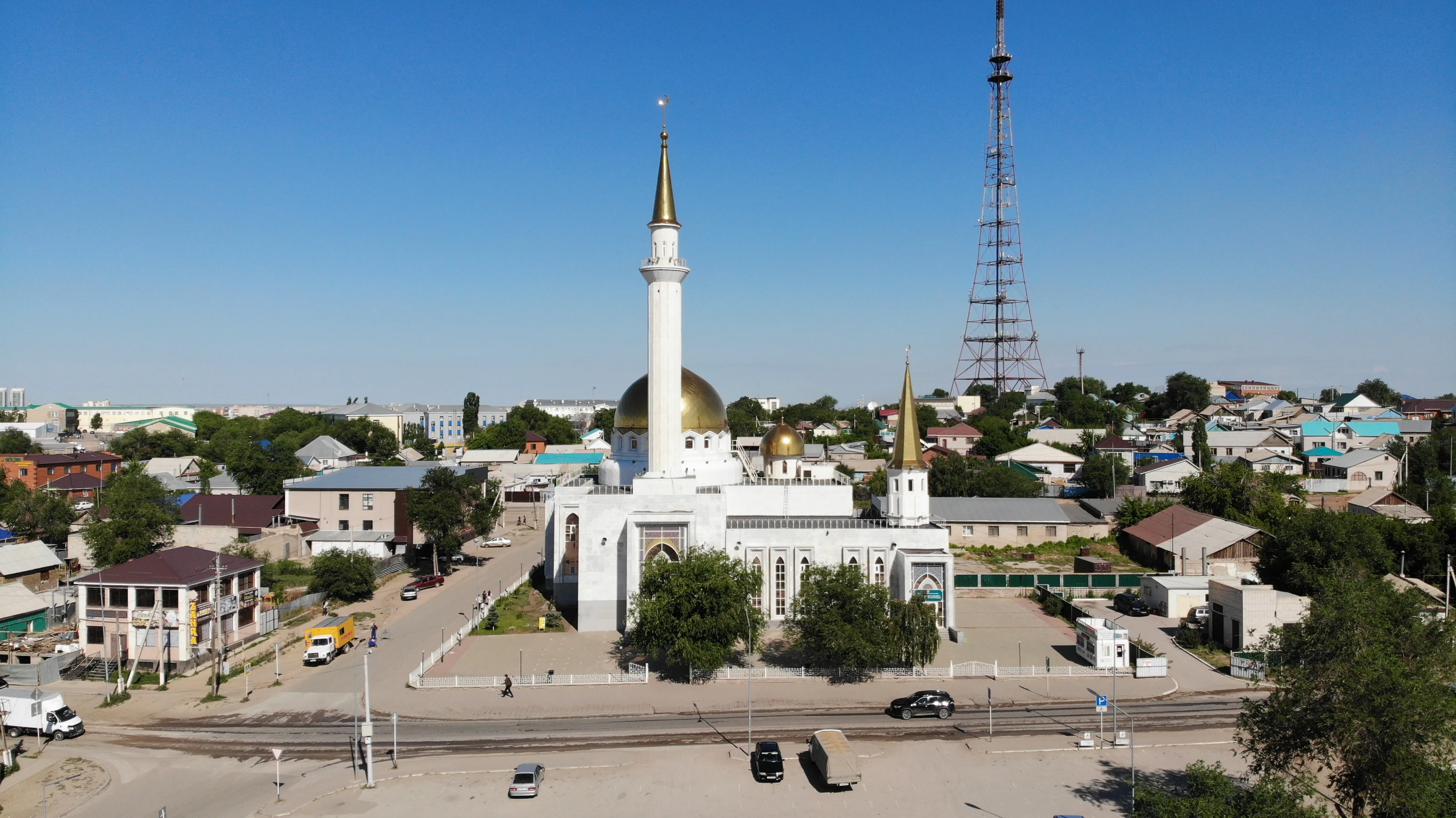
Historical Background: The City Mosque of Aktobe is one of the oldest religious and architectural sites in the city. Its history dates back to the beginning of the 20th century and is connected with the initiative of the local Muslim community, Kazakh benefactors and Tatar merchants. The foundations of the building were laid around 1901, and by the early 20th century the site had become an important spiritual centre of the city.
In the State List of Historical and Cultural Monuments of Local Significance, the site is dated to 1908. Historical materials also mention earlier stages of the mosque’s construction in 1901–1904. According to these sources, the mosque complex once included a madrasah, houses for imams and a guest house for Muslim visitors.
The first chief imam of the mosque is known as Ibatulla Mazhituly. In 1929, during the Soviet anti-religious campaign, the mosque was closed. Later, the building was handed over to the regional printing house. During the Great Patriotic War, some stone fences and structural elements of the mosque were dismantled and used for the needs of enterprises evacuated to the city.
In 1991, following the request of the Muslim community and a decision by the regional administration, the building regained its status as a mosque. Since then, the site has once again served its spiritual purpose and has become an important part of Aktobe’s religious life.
Description of the Monument: The City Mosque is a two-storey rectangular building. Its approximate dimensions are 9.67 m by 21.40 m, with a height of 6.7 m. The walls are built of stone blocks combined with fired brick.
Architecturally, the mosque belongs to the type of longitudinal-axis mosque with a later minaret composition, a form widespread in the Aktobe Region. On the northern facade rises an eight-sided minaret with a domed top and a metal roof. The total height of the minaret reaches 20.5 m. On the opposite facade there is a projecting mihrab apse.
The wall surfaces are divided by niches, pilaster strips, window openings and doorways. This creates a restrained yet expressive architectural appearance. The combination of brick and stone blocks emphasises the historical character of the building and its connection with early 20th-century urban construction traditions.
In 2013, on the occasion of the mosque’s 110th anniversary, major repair works were carried out to preserve its historical appearance and continue its religious function.
Opening of the Monument: The history of the City Mosque is linked to the beginning of the 20th century, when it was built with the support and donations of the Muslim community of Aktobe. Initially, the building functioned as a mosque, madrasah and spiritual centre.
During the Soviet period, the mosque was closed and lost its original religious purpose. Its return to the Muslim community in 1991 became an important moment in the history of the site. This event symbolised the restoration of religious tradition and historical continuity.
Why Is This Monument Important?
The City Mosque holds a special place in the religious, cultural and architectural history of Aktobe. It is not only a place of worship, but also a witness to the social life, unity and charitable traditions of the city’s Muslim community in the early 20th century.
The fate of the mosque reflects the complex history of religious buildings in Kazakhstan during the Soviet period: closure, use for non-religious purposes, partial loss of original elements and eventual return to spiritual life.
As a historical and cultural monument of local significance, the mosque preserves the memory of old Aktobe and remains an important architectural landmark of the city.
What Can You Notice When Looking at the Monument?
When viewing the mosque, pay attention to its longitudinal-axis layout, eight-sided minaret and mihrab section. These elements reveal the building’s religious function and the traditions of Muslim architecture.
The combination of brick and stone blocks, the rhythm of the windows and doorways, and the compositional unity of the minaret with the main building are especially noteworthy.
Did You Know?
Originally, the City Mosque of Aktobe was not only a place of prayer. The complex also included a madrasah, houses for religious staff and a guest house for Muslim visitors.
During the Soviet period, the mosque was not used for religious purposes for many years. Nevertheless, the building survived and was returned to the Muslim community in 1991. This makes the site especially important for understanding the spiritual history of the city.
Read More
- Adilet Legal Information System of the Republic of Kazakhstan. State List of Historical and Cultural Monuments of Local Significance of Aktobe Region
- Spiritual Administration of Muslims of Kazakhstan. Information about the Aktobe City Mosque
- Nur Gasyr Regional Central Mosque. Material about the Aktobe City Central Mosque
- Aktobe newspaper. Historical material “Ақтөбедегі алғашқы мешіт”
- Aktobe newspaper. Material “Көне мешіт жаңарады”
Photo gallery
Location on the map
Related sites
 Local significance
The “Cannon” Memorial Sign Dedicated to the 312th Rifle Division and the 101st Rifle Brigade
Aktobe city, Aktobe, Zh. Kereyev Street
 Preliminary listing
Monument to Yeset Batyr Kokiuly
Aktobe city, 2nd Microdistrict, Yeset Batyr Residential Area
 Local significance
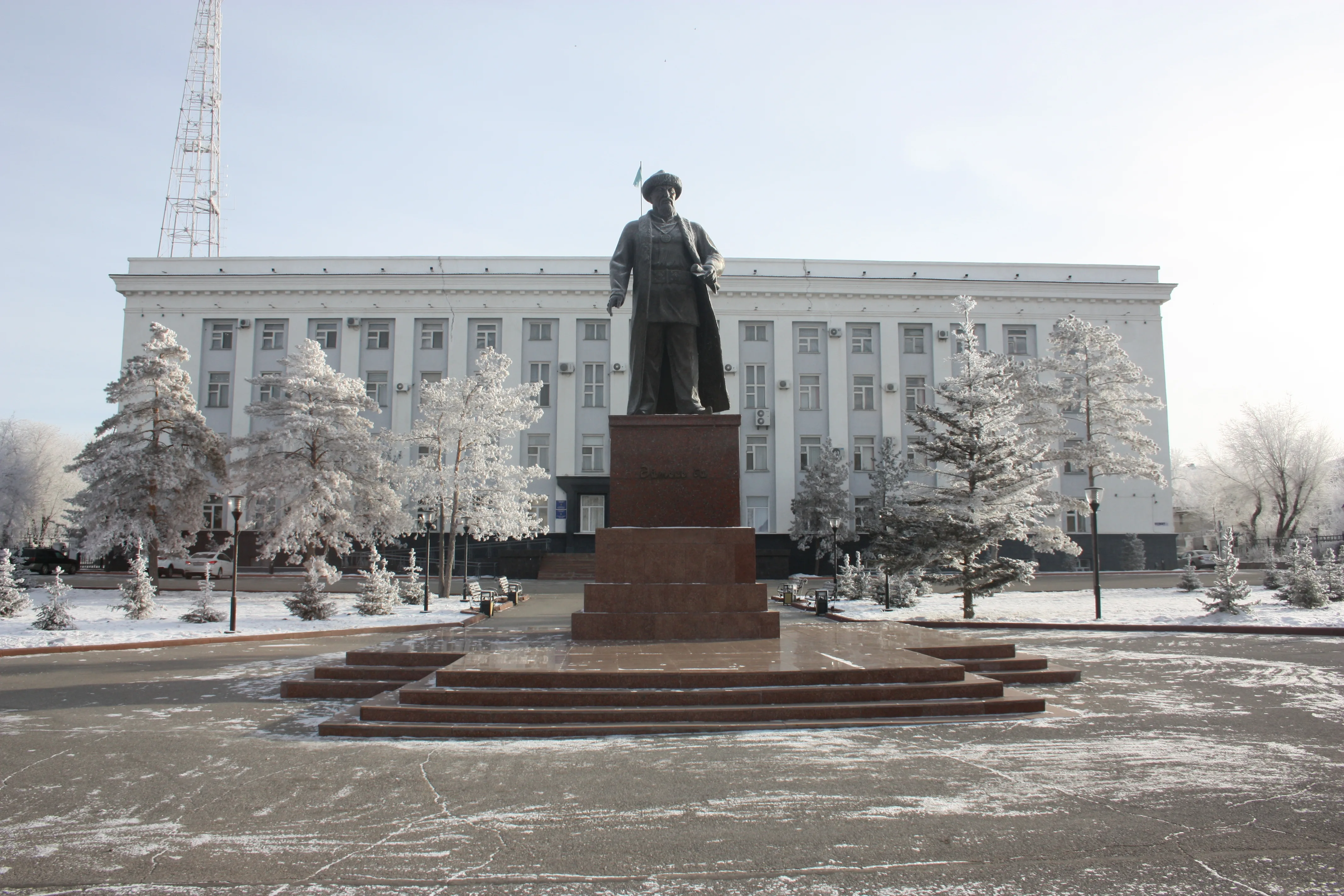
Monument to Aiteke Bi
Aktobe city, T. Akhtanov Street, in front of the city akimat building