
Mausoleum of Bekkul Bi

Historical Background: Bekkul Bi is a historical figure associated with the institution of biys in Kazakh society, the tradition of public mediation and the spiritual memory of the region. In oral traditions and local history materials, he is described as an influential biy, a fair judge and a figure who helped preserve unity among the people in the 17th century, in the area of the Or and Kargala rivers.
In the traditional steppe legal system, a biy was not only a judge who resolved disputes, but also a guardian of social harmony, a mediator in relations between clans, an organiser of seasonal migration routes and a spiritual authority. According to oral accounts, Bekkul Bi helped stabilise the life of local communities during difficult times, defining summer pastures and winter settlements and contributing to the preservation of the people.
In popular memory, Bekkul Bi is also remembered as a saintly figure. According to legend, the famous Kazakh batyr Eset Kokiuly was born from Bekkul Bi’s only daughter. Another legend says that Bekkul Baba blessed his thirteen-year-old grandson Eset to defend the land and the people, giving him an argamak horse.
Description of the Monument: The Mausoleum of Bekkul Bi was built in 2000 near Bekkul Baba village, at the foot of the Koskony r–Kyzemshek hills. It is a single-chamber, octagonal structure. Its compositional axis is oriented from the north-east to the south-west.
The walls are made of silicate brick on a cement foundation, and the exterior is decorated with ornamental brickwork. The entrance is designed in the form of a pointed arch, with arched light openings on both sides. The upper part of the mausoleum is completed with a drum-like structure and a dome.
Stone enclosures and tombstones made of natural stone can be seen within the cemetery area. These elements show that the site is not only an individual mausoleum, but also part of a historical, cultural and spiritual landscape.
Opening of the Monument
The mausoleum at the burial place of Bekkul Bi was built in 2000. A house for pilgrims was also constructed nearby. This initiative became an important step in honouring the memory of a historical figure, reviving sacred places and preserving the spiritual heritage of the region.
The exact date of the official opening is not specified in open sources. However, the site built in 2000 was later included in the State List of Historical and Cultural Monuments of Local Significance of Aktobe Region and recognised as a protected cultural heritage site.
Why is this monument important?
The Mausoleum of Bekkul Bi is an important sacred site that reflects the historical role of the institution of biys, the tradition of preserving national unity and the spiritual memory of Kazakh society. It recalls not only one historical figure, but also an entire era with its social, legal and spiritual values.
The mausoleum reflects Bekkul Bi’s authority, the culture of traditional justice based on fairness and reconciliation, and the people’s respect for sacred places. Today, it is a place of reverence for pilgrims and an important destination for learning about the historical and spiritual heritage of the Aktobe Region.
What can you notice when looking at the monument?
When viewing the mausoleum, pay attention to its octagonal form, pointed-arch entrance, domed structure and decorative brickwork. These elements are closely connected with the traditions of Kazakh memorial architecture.
Its location near the Koskony r–Kyzemshek hills is also meaningful. The natural landscape, tombstones and stone enclosures within the cemetery area show that this place has long been perceived as a sacred space.
Did You Know?
According to a popular legend, Bekkul Bi blessed his grandson Eset Kokiuly to follow the path of defending the people and the land. Later, Eset Kokiuly became one of the well-known batyrs in Kazakh history.
Local historians and researchers such as Bayangali Kultayev, Erkin Kurmanbekov, Ryszhan Ilyassova and Adilkhan Zhubaniyazov are mentioned among those who collected and promoted information about Bekkul Bi.
In 2019, information about the Mausoleum of Bekkul Baba was digitised through a QR system, allowing visitors to access historical and educational information about the site online.
Read More
- Adilet Legal Information System of the Republic of Kazakhstan. State List of Historical and Cultural Monuments of Local Significance of Aktobe Region
- Ruh.kz. Reference material about the Mausoleum of Bekkul Bi
- Aktobe newspaper. Material about sacred places in Aktobe
- Aqtóbe TV. Material about the digitalisation of the Mausoleum of Bekkul Baba
Photo gallery
Location on the map
Related sites
 Local significance
The “Cannon” Memorial Sign Dedicated to the 312th Rifle Division and the 101st Rifle Brigade
Aktobe city, Aktobe, Zh. Kereyev Street
 Preliminary listing
Monument to Yeset Batyr Kokiuly
Aktobe city, 2nd Microdistrict, Yeset Batyr Residential Area
 Local significance
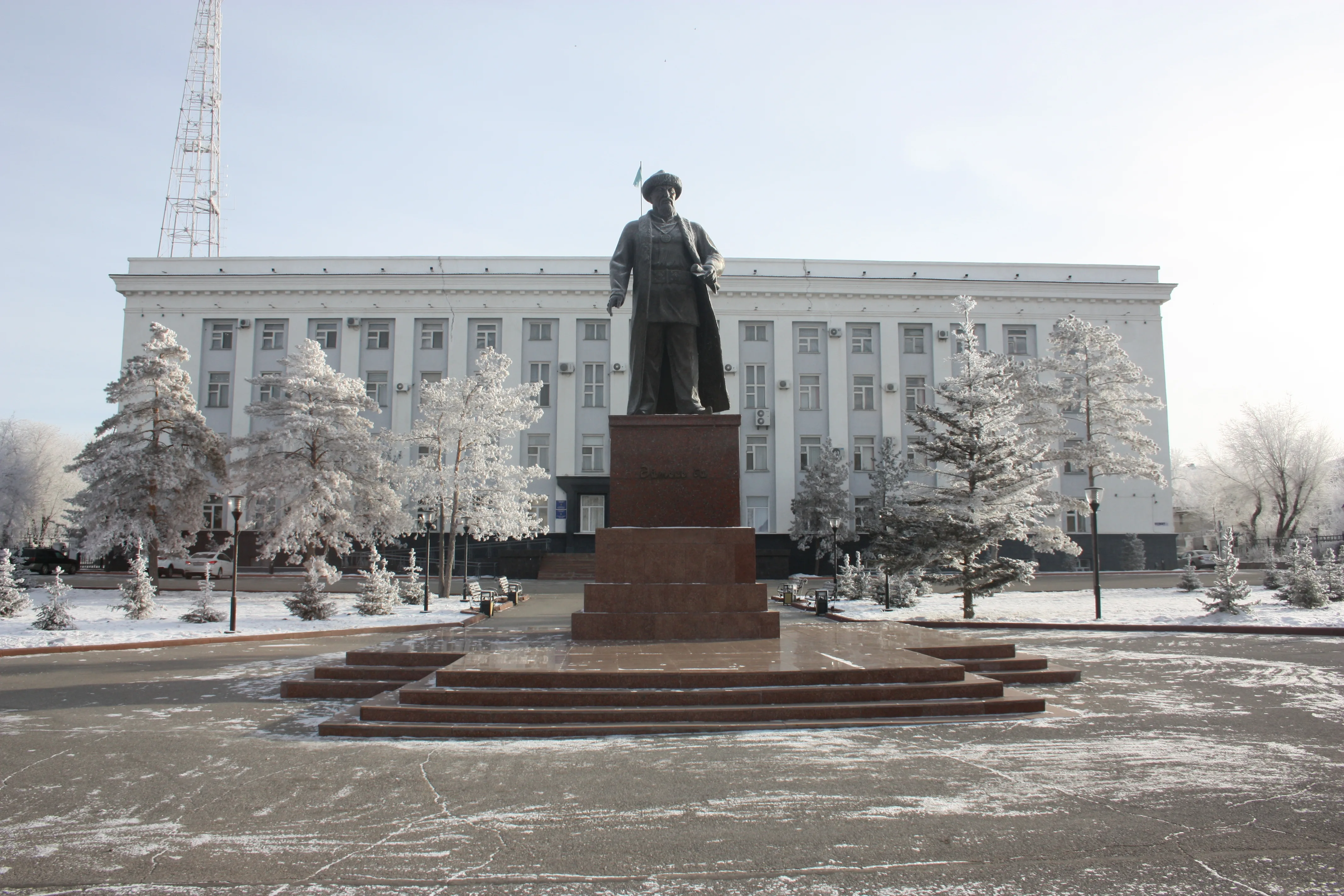
Monument to Aiteke Bi
Aktobe city, T. Akhtanov Street, in front of the city akimat building